Featured
Africa Palm Oil: Rising Demand in India, China, and the EU
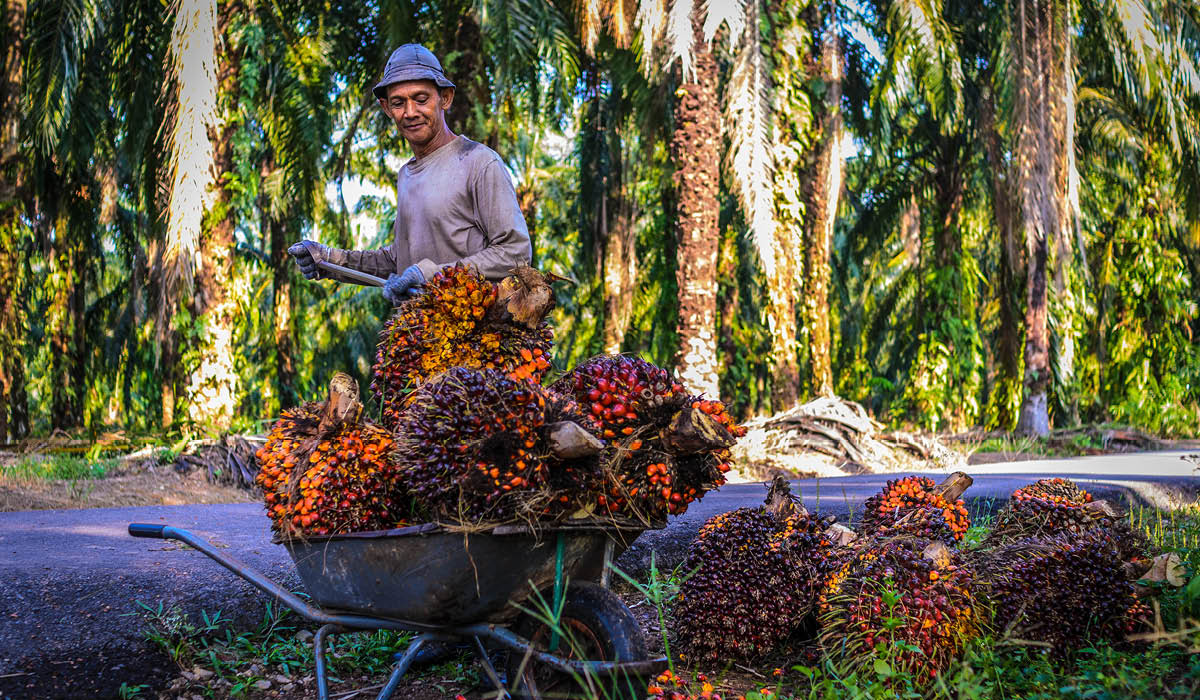
Palm oil is often talked about in terms of production—who grows the most, which plantations are expanding. But increasingly, what matters just as much is who is buying, and where demand is growing: India, China, and the European Union. These markets shape prices, trade flows, regulation, and ultimately the fortunes of African palm oil stakeholders.
This article explores the latest trends in demand from those three regions, how Africa fits into the picture, what challenges and opportunities exist, and what stakeholders should watch in the coming months.
Global Demand Overview: Why India, China & the EU Matter
Before zooming in on Africa, it’s helpful to understand why demand from these three regions is so influential:
-
India is the world’s largest importer of vegetable oils. Given its population size, fast-urbanizing middle class, consumption patterns (frying, snacks, sweets), and limited domestic edible oil production, it is heavily dependent on imported oils like palm, soya, sunflower, etc.
-
China is a massive food manufacturing and consumption hub, with growing consumer demand, but faces its own domestic soy, rapeseed, and sunflower sectors; its trade decisions ripple across global vegetable oil supply chains.
-
The EU is significant not only because of its consumption but because of its regulatory power. Sustainability rules (e.g. the EU’s Deforestation Regulation, renewable energy mandates, biofuel policies) influence how palm oil must be produced and traceability requirements. Buyers in the EU often set standards that become global de facto norms.
Hence demand in these markets affects prices globally, and any shifts (in policy, in preferences, in regulation) in India, China, or the EU tends to ripple through to suppliers everywhere—including Africa.
Recent Demand Trends: Data & Developments
Here are some of the latest data points showing how demand from India, China, and the EU is evolving, and where Africa is an opportunity or already taking part.
India
-
In August 2025, India imported 990,528 metric tons of palm oil, marking a one-year high. This was a 15.76% increase from July 2025. Key drivers included competitive pricing relative to other oils like soyoil, as well as demand associated with the festive season. Reuters
-
Earlier in 2025, India’s edible oil imports overall dropped in February to the lowest in four years, but palm oil alone rose 35.7% month-on-month to ~373,549 tons. The drop in soyoil and sunflower oil shipments contributed to this shift. Reuters
-
Another signal: Malaysia‐sourced palm oil saw its share of India’s imports rise by 35% in the first half of 2025, according to the Malaysian Palm Oil Council (MPOC). The festive season is expected to push demand further. The Economic Times
-
Also, recent data show that palm oil has become cheaper than soybean oil in India, reversing a previous trend. According to S&P Global, palm oil was approximately US$50/MT cheaper than soybean oil in late April 2025. This price differential boosts demand for palm oil in food industries. S&P Global
Overall, India is clearly shifting more toward palm oil when prices permit, especially during high-consumption seasons and when competitive advantage exists.
China
-
Demand from China appears more mixed. Some reports suggest that consumption is rising steadily, especially in the food manufacturing, edible oils, and hospitality sectors. But supply dynamics, stocks, and domestic policy somewhat dampen sudden surges. P Market Research+1
-
For instance, S&P Global noted that though China is the world’s second largest palm oil buyer after India, in some recent periods demand has been “very slow,” with purchases restricted mostly to meeting current consumption rather than speculative buildup. S&P Global
EU
-
The European Union has seen a decline in palm oil imports in recent periods. Between July 2024 and early March 2025, the EU-27 imported just under 1.9 million tonnes of palm oil from abroad—down sharply from ~2.4 million tonnes in the same period the previous year. UkrAgroConsult+1
-
Imports from Malaysia and Indonesia both fell: Malaysia’s shipments dropped around 30%, while Indonesia’s deliveries were down about 23% year-on-year in that period. Malaysia supplied ~426,000 tonnes, and Indonesia ~608,100 tonnes in that span. Prestasi Sawit Malaysia+1
-
One key factor: EU regulatory changes such as the Deforestation Free Product Regulation (EUDR), stricter sustainability criteria, and changes in mandates (e.g. for biofuels) are making it harder, more expensive, or more complex for palm oil suppliers to meet the required standards. Biofuels International+2Antara News+2
Africa’s Role & Opportunity in Meeting Rising Demand
Given those demand trends, Africa is in a position to play a growing role—but it must address some gaps.
Current African Export/Import Dynamics
-
Currently, much of Africa is more a consumer of palm oil than a major exporter. Many West and Central African countries produce palm oil but still import refined palm oil or crude oils depending on local capacity, especially for processing.
-
However, there are shifts where African demand itself is expanding, meaning producers can serve local/regional demand first as a base from which to expand export volumes. For example, Malaysian and Indonesian suppliers are looking toward greater exports to Africa, seeing it as a growth market since EU demand is under pressure. cropgpt.ai+1
-
Also, some African countries are increasing their import volumes. According to data, Africa’s demand for Malaysian palm oil grew ~17% year-on-year, rising to ~3.9 million tonnes in a certain period. cropgpt.ai
Why Africa is Attractive to Suppliers & Buyers
-
Large, Growing Population & Rising Urban Middle Class:- Many African countries are seeing fast urbanization, rising incomes, and dietary shifts toward more processed foods, increased cooking oil use, and more frequent consumption of fried foods/snacks, etc. That means domestic edible oil demand is rising.
-
Lower Per Capita Consumption:- In many African countries, per capita consumption of oils and fats is low compared to global averages, leaving room for substantial growth. For instance, Kenya’s per-capita oils & fats consumption is quoted in reports at ~12-15 kg, compared to global average of ~31 kg. i3investor
-
Geographic Proximity & Trade Costs:- Africa’s proximity to source countries of palm oil (like Malaysia, Indonesia) is still far, but increasingly, African producers themselves are becoming supply sources or regional hubs. Also, with improvements in trade infrastructure and trade agreements (e.g. intra-Africa trade, free trade zones), the transaction/logistics costs are shifting in favor of more local/regional supply.
-
Regulatory Shifts & Diverted Supply:- As EU regulations tighten (EUDR, sustainability mandates), some producers are considering diverting exports away from the EU to markets with less stringent regulatory burdens or to regions where compliance is easier – among those are African markets. For example, Indonesia has considered diverting palm oil exports to Africa as EU demand declines under new regulation. Antara News
Also, as imports to the EU fall, more global supply is searching for alternative markets — creating opportunities for buyers/importers in Africa to negotiate better terms or volumes.
Challenges & Risk Factors Africa Must Navigate
While demand trends are promising, African producers and traders face several risks or constraints in fully benefitting.
Quality & Certification
-
The regulatory demands from EU (and increasingly from other importing markets) for traceability, certification, deforestation free proof, etc., mean that not all palm oil production or processing in Africa currently meets these standards. This can restrict access to premium markets.
-
Complying with the data, monitoring, reporting requirements is costly, and the smallholder-dominated structure in many African countries can make uniform compliance difficult.
Infrastructure & Processing Capacity
-
Africa often struggles with inadequate milling, refining, transportation networks, storage, cold chain etc. That increases over-losses, adds cost, reduces competitiveness. If raw materials have to travel far, spoil or lose quality, or if refining capacity is lacking, margins shrink.
-
Also, foreign exchange volatility, import cost of inputs (fertilizer, machinery etc.), energy cost, and logistics cost compound the challenge of turning competitive global demand into profitable supply.
Policy & Trade Barriers
-
Tariffs, non-tariff barriers, import quotas, or export controls can shift margins. Local policy instability can disincentivize investment.
-
Also, regulatory alignment with importing markets (EU, India, China) is necessary—not only in terms of quality, but environmental standards, labor standards, etc.
Competition from Asia & Other Oils
-
Major suppliers like Indonesia and Malaysia still dominate volume supply globally. Their economies of scale, mature supply chains, and often lower cost production (though sometimes higher in sustainability compliance cost) make them tough competitors.
-
Other vegetable oils (soybean, sunflower, rapeseed) also compete, especially when global supply is favorable or when those oils have perception or tariff advantages in certain markets.
Strategic Recommendations for Africa’s Palm Oil Stakeholders
For Africa to take the rising demand in India, China, and EU and turn it into sustainable growth, here are key strategies.
1. Improve Compliance & Sustainability Infrastructure
-
Invest in traceability (e.g., satellite monitoring, mapping, certified land use), environmental standards, and labor standards.
-
Promote smallholder cooperatives to pool resources for certification or sustainability audits.
2. Expand Processing & Refining Locally
-
Raw export is often less profitable than exporting refined or fractionated oils. Building refining capacity locally or regionally can capture more margin.
-
Governments and private sector should incentivize investment in processing facilities, perhaps through public-private partnerships, tax incentives, strategic industrial zones.
3. Use Trade Agreements & Market Diversification
-
Leverage trade treaties (AfCFTA etc.) to reduce intra-Africa trade barriers, harmonize quality standards, and reduce cost and friction.
-
Diversify export markets beyond traditional ones; track demand in India (which is price sensitive) and emerging markets in China, SE Asia, Middle East, etc.
4. Price Competitiveness
-
Ensure production cost is minimized: efficient mills, better seedlings/palms, good agronomic practices, appropriate fertilizer use, minimizing post-harvest losses.
-
Efficient logistics: shorten the time from farm to mill, improve road/transport infrastructure, reduce spoilage, optimize export logistics.
5. Monitor Regulatory Trends Closely
-
Stay updated on regulations in importing markets – EU’s EUDR, RED II, biofuel mandates; India’s import duty changes; China’s evolving trade policies. Being ahead of policy shifts gives early mover advantage.
-
Engage in advocacy where possible, participate in trade dialogues, and collaborate with international organizations to ensure fair and feasible regulatory regimes.
Outlook: What Might the Near Future Hold (2025-2027)
Based on current demand trends, regulatory shifts, and Africa’s latent potential, here are likely developments in the near future.
-
Growth in Imports by India:- Given that India already bumped up palm oil imports sharply in certain months (e.g. August 2025), and price advantage persists when palm undercuts alternatives, demand will likely stay strong. Seasonal festivals and industrial food demand will continue to drive spikes. India may become the largest buyer of palm oil globally for many producers.
-
Moderated But Increasing Chinese Demand:- China might not match India’s demand curve in the short term because of stock concerns and domestic supply issues, but over time its food manufacturing sector, hospitality, and processed food demand will push consumption upward. Also, stricter domestic environmental policies could push China to look for ethically produced palm oil, creating opportunity for African producers who can meet those requirements.
-
EU Demand Remains Volatile and Declining but with Premium Niches:- Overall EU imports are decreasing, largely because of stricter regulation and sustainability concerns (deforestation regulation, RED II’s evolving rules). However, there remains demand for certified sustainable palm oil, and premium consumers (food brands, health/trust-sensitive market segments) will pay more for compliance. This can be a profitable niche for African producers who climb the compliance curve.
-
Re-Direction of Supply Flows:- As EU demand declines or becomes harder to satisfy, suppliers in Indonesia/Malaysia are already considering pivoting or redirecting exports toward Africa, India, the Middle East, etc. Africa may receive more supply, but also opportunity for African exporters to fill in supply gaps, particularly if domestic or regional production can meet quality and standards.
-
Regulatory Pull-through Effects:- Regulations in importing markets will increasingly dictate production practices in African palm oil sectors. Producers will need to adapt early (sustainability, deforestation-free certification etc.), or risk losing access to lucrative markets. Also, consumer preferences globally are pushing in favor of sustainable certifications, ethical sourcing etc.
-
Investment & Capacity Building:- To truly harness rising demand, investment is likely to increase in upstream (plantations, improved seed varieties), midstream (mills, refining), and downstream (packaging, branding, traceability). Countries with more stable policy environments, supportive governance, and better infrastructure will attract more investment.
What This Means for African Traders & Producers (Key Takeaways)
-
Focus first on meeting domestic/regional demand: before chasing export markets, build supply, quality, processing for local/regional markets which often have lower barriers and can be more reliable.
-
Certification is no longer optional for some markets: EU demand is shrinking for non-certified, non-traceable palm oil; buyer preferences and regulations favor sustainable, transparent supply chains.
-
Price competitiveness matters: cost of production, transport, and post-harvest losses can eat into margins. Efficiency is crucial.
-
Stay nimble on markets: with shifts among India, China, EU, and with regulations changing, being able to pivot export volumes between markets (depending on demand, price, regulation) will be advantageous.
-
Policy engagement & partnerships: working with government, regional trade bodies, NGOs, investors to improve infrastructure, secure land rights, streamline regulation, improve processing.
Conclusion
Demand for palm oil from India, China, and the EU is at a critical inflection point. India is already showing strong demand growth when price advantages present themselves; China remains cautious but has long-term growth potential; and the EU is tightening its criteria, reducing overall volumes but elevating the importance of sustainability, traceability, and premium sourcing.
For Africa, these shifts create both opportunity and urgency. Producers and traders who can align with global standards, reduce production cost, improve quality, and adapt to regulatory trends stand to benefit from rising demand. On the other hand, failure to adapt may result in missed chances or be squeezed out by more efficient or compliant producers elsewhere.
In short, rising demand from India, China, and evolving dynamics in the EU demand that Africa raise its standards, build its infrastructure, and act strategically. The coming years may well determine whether African palm oil becomes a global supply leader—or remains largely a regional story.