Featured
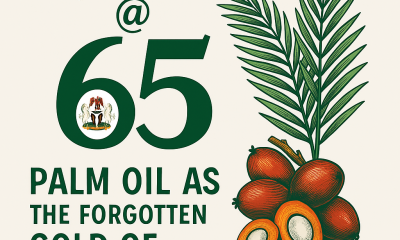
Nigeria at 65: Can Palm Oil Revive Our Economic Independence?

October 1st, 2025 marks 65 years since Nigeria gained independence from Britain. For over six decades, the country has struggled to find its economic footing. While crude oil became the backbone of the economy, it also created what many analysts call the “resource curse” — overdependence on petroleum exports at the expense of agriculture and other industries.
Yet before crude oil, Nigeria’s economic strength lay in another natural resource: palm oil. In the 1950s and 1960s, Nigeria was the world’s largest exporter of palm oil, accounting for over 40% of global supply. Palm oil was so central to the nation’s economy that it was often referred to as “red gold.”
Today, as Nigeria turns 65, the question arises: Can palm oil become the forgotten key to reviving our economic independence?
1. Palm Oil in Nigeria’s Independence Story
When Nigeria gained independence in 1960, agriculture contributed nearly 65% of GDP and employed over 70% of the population. Palm oil, cocoa, groundnuts, and rubber were the four major cash crops.
- In 1961, Nigeria produced around 43% of the world’s palm oil, dominating exports to Europe and Asia.
- The Eastern Region, especially present-day Abia, Anambra, Imo, and Cross River States, was the hub of palm oil farming.
- Palm oil revenue financed major infrastructure projects, schools, and hospitals in pre- and post-independence Nigeria.
For a brief moment, palm oil was not just a commodity — it was a symbol of Nigeria’s self-reliance and prosperity.
2. The Fall of the “Red Gold” (1970s–1990s)
Nigeria’s palm oil dominance did not last. Several factors contributed to the decline:
- Oil boom of the 1970s: Crude oil discoveries in the Niger Delta shifted attention away from agriculture. Government policy and investment focused on petroleum, leaving palm oil farmers neglected.
- Civil War (1967–1970): Fighting in the Eastern Region devastated palm oil-producing communities. Many plantations were abandoned, and production plummeted.
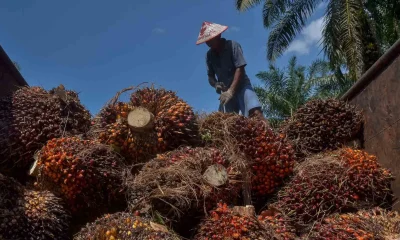
- Asian competition: Malaysia and Indonesia, who imported palm seedlings from West Africa, invested heavily in research, mechanization, and large-scale plantations. By the 1990s, they had overtaken Nigeria as global leaders. Today, the two countries control over 85% of global palm oil supply.
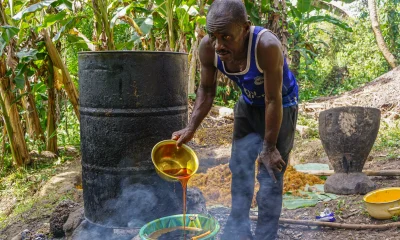
- Fragmented farming methods: While Asian producers built large plantations, Nigerian farmers remained smallholders using manual harvesting techniques.
By the early 1990s, Nigeria had shifted from a leading exporter to a net importer of palm oil.
3. Nigeria’s Current Palm Oil Industry (2025 Snapshot)
Despite its decline, palm oil remains important in Nigeria:
- Nigeria is Africa’s largest consumer of palm oil, with annual demand of about 2.5 million metric tonnes (MMT).
- Local production is estimated at 1.4 MMT, creating a supply gap of over 1.1 MMT, which is filled through imports from Malaysia and Indonesia.
- Palm oil contributes roughly 3% to Nigeria’s agricultural GDP.
- Over 4 million smallholder farmers depend on palm oil for their livelihood.
Palm oil is everywhere in Nigeria — in cooking, soap, cosmetics, margarine, industrial lubricants, and biofuels. Yet Nigeria spends hundreds of millions of dollars annually on imports that could have been avoided if the industry was revitalized.
4. Palm Oil as Economic Independence — The Case for Revival
Why should Nigeria look back to palm oil at 65? Several reasons stand out:
- Job Creation: With mechanization and investment, the palm oil industry could employ millions more Nigerians, especially in rural areas.
- Import Substitution: Closing the supply gap would save foreign exchange. Nigeria spends over $500 million annually importing palm oil.
- Export Potential: Beyond domestic use, global demand for palm oil continues to grow, projected to reach 80 MMT by 2030. Nigeria can re-enter the export market.
- Industrial Growth: Palm oil is not just food — it is an input for over 50 industries, from cosmetics to pharmaceuticals and renewable energy.
- Food Security: With inflation biting, palm oil could help stabilize prices of cooking oil and related food products.
If tapped strategically, palm oil could be Nigeria’s “second independence” — economic freedom from oil dependency.
5. Lessons from Asia: What Nigeria Can Learn
Malaysia and Indonesia’s rise holds key lessons for Nigeria:
- Research & Development: Both countries invested in agricultural research institutes to improve palm seedlings, increasing yields per hectare. Nigeria has the Nigerian Institute for Oil Palm Research (NIFOR), but it remains underfunded.
- Mechanization: Asian producers moved from hand-harvesting to large-scale mechanized plantations. Nigeria’s production is still 80% smallholder-based.
- Policy Consistency: Clear government policies, subsidies, and investor incentives created stability in Asia, unlike Nigeria where agriculture policies shift with each administration.
- Export-driven strategy: Malaysia’s government actively supported palm oil exports through trade diplomacy. Nigeria has not prioritized palm oil in its export agenda.
6. The Timeline of Nigeria’s Palm Oil Journey
- 1800s–1950s: Colonial-era palm oil exports make Nigeria one of the world’s leading suppliers.
- 1960: Independence. Palm oil accounts for nearly half of Nigeria’s agricultural exports.
- 1970s: Oil boom shifts focus to petroleum. Palm oil neglected.
- 1967–1970: Civil War devastates Eastern palm plantations.
- 1980s–1990s: Asian producers (Malaysia, Indonesia) rise as global leaders. Nigeria becomes a net importer.
- 2000s: Import dependence deepens. Supply gap widens.
- 2010s: Central Bank introduces restrictions on forex access for palm oil imports to encourage local production.
- 2020s: Nigeria’s demand hits 2.5 MMT, with imports filling over 1.1 MMT gap.
- 2025 (Nigeria @ 65): Government revisits agro-industrial policies, with palm oil seen as a potential growth driver.
7. Challenges Facing Palm Oil Revival
Reviving palm oil will not be easy. Challenges include:
- Land ownership disputes slowing plantation expansion.
- Inadequate funding for research and farmer training.
- Low yields (Nigeria’s average yield is 2–4 tonnes per hectare, compared to Malaysia’s 8 tonnes).
- Inconsistent policies, discouraging private sector investment.
- Smuggling and cheap imports undermining local producers.
8. Policy Pathways to Economic Independence through Palm Oil
If Nigeria wants palm oil to be the “forgotten gold” that revives independence, the following must happen:
- Massive investment in R&D through NIFOR and universities to boost seedling quality.
- Public-private partnerships to fund large-scale plantations.
- Mechanization & technology adoption for smallholder farmers.
- Export promotion policies to position Nigeria in Africa’s palm oil trade under AfCFTA (African Continental Free Trade Area).
- Value-chain development — supporting industries that use palm oil (soap, cosmetics, biofuel) to create jobs and diversify exports.
9. The Symbolism of Palm Oil at 65
Palm oil is more than an agricultural product. It represents a missed opportunity in Nigeria’s independence story. At 65, the country stands at a crossroads: remain dependent on crude oil or diversify into sectors like palm oil that once defined its global economic standing.
If Nigeria can reposition palm oil as a national priority, it could become both a symbol and substance of true independence — freedom from overdependence on petroleum and food imports.
Conclusion
Nigeria at 65 is a nation of untapped potential. Palm oil, once the country’s pride, is now the forgotten gold. Reviving it requires bold leadership, consistent policies, and massive investment in technology and farmers.
The world is hungry for palm oil — and Nigeria has the land, the climate, and the history to reclaim its place. If done right, palm oil could be Nigeria’s ticket to economic independence in the post-oil era.