Deep Dive
The AfCFTA Effect: Will African Unity Boost Palm Oil Trade Competitiveness?

When the African Continental Free Trade Area (AfCFTA) officially launched in 2021, it was hailed as a historic leap forward: the largest free trade area in the world by number of countries, covering a population of 1.4 billion people and a combined GDP of around $3.4 trillion. For sectors like palm oil, which are vital to African food security, industry, and exports, AfCFTA has the potential to reshape the entire competitive landscape.
But the question remains: will African unity through AfCFTA actually boost the continent’s palm oil trade competitiveness?
Palm Oil: Africa’s Untapped Gold
Palm oil is not just a cooking ingredient—it is a strategic commodity. Globally, it is used in food processing, cosmetics, pharmaceuticals, biofuels, and even industrial lubricants. According to the USDA (2025), global palm oil production is projected to reach over 80 million metric tons, dominated by Indonesia and Malaysia (who together account for ~85% of output).
Africa, ironically, is where the oil palm tree originated. Nigeria, Ghana, Côte d’Ivoire, and Cameroon are among the biggest producers on the continent, yet Africa remains a net importer of palm oil. Data from IndexMundi (2024) show that Africa consumes more than it produces, relying heavily on imports from Asia to meet demand.
With AfCFTA, there is an opportunity to reverse this narrative by reducing trade barriers, harmonizing standards, and building regional value chains that keep more value within Africa.
The AfCFTA Promise
AfCFTA is more than a tariff-cutting agreement. It aims to:
- Remove tariffs on 90% of goods – making intra-African trade cheaper.
- Harmonize rules of origin – ensuring African goods get preferential treatment across borders.
- Tackle non-tariff barriers – such as logistics bottlenecks, customs delays, and inconsistent regulations.
- Boost industrialization – encouraging value-added processing instead of raw exports.
If implemented effectively, these pillars could transform palm oil trade: cheaper cross-border flows, stronger regional supply chains, and higher competitiveness against Asian imports.
Opportunities for Palm Oil Under AfCFTA
1. Bigger Continental Market:- AfCFTA integrates a market of over 1.4 billion consumers. Palm oil producers in Nigeria or Ghana could access consumers in landlocked countries like Mali, Burkina Faso, or Niger more easily, without facing prohibitive tariffs.
Currently, intra-African trade accounts for only 15% of Africa’s total trade, compared to 60% in Europe and 50% in Asia (UNCTAD, 2023). If AfCFTA raises that share, palm oil will be a prime beneficiary, since it’s a staple across West, Central, and East Africa.
2. Reduced Import Dependence:- Africa imports an estimated 7–9 million tons of palm oil annually from Asia (MPOC, 2024). By strengthening regional supply chains, AfCFTA could cut that dependence, boost local industry, and keep billions of dollars circulating within Africa’s economy.
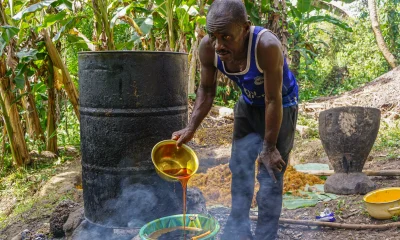
3. Value Addition & Industrial Growth:- Today, much of Africa’s palm oil is exported in crude form, with limited refining capacity locally. Under AfCFTA, countries can specialize and collaborate: for example, Nigeria focusing on production, Ghana building refining hubs, and Côte d’Ivoire exporting to Francophone West Africa. Harmonized rules could encourage regional palm oil corridors.
4. Attracting Investment:- Unified rules, lower tariffs, and bigger markets make African palm oil more attractive to investors. Infrastructure like refineries, storage facilities, and logistics networks become more viable if investors know they can serve multiple African countries seamlessly.
5. Trade Diversion from Asia:- As the EU’s deforestation-free regulations complicate exports for Malaysia and Indonesia, those producers are eyeing Africa as a growing market. AfCFTA gives African producers a chance to defend their market share through stronger competitiveness and coordinated trade policy.
Challenges That Could Undermine the Promise
But optimism alone is not enough. Several challenges could limit how far AfCFTA boosts palm oil competitiveness:
1. Implementation Gaps:- AfCFTA’s full rollout is slow. Many countries have yet to align tariffs, remove non-tariff barriers, or harmonize customs rules. If delays persist, Asian exporters will continue to dominate African palm oil supply.
2. Infrastructure Bottlenecks:- Poor roads, congested ports, high transport costs, and weak storage facilities make moving palm oil across borders expensive. Even with zero tariffs, if transport costs are higher than importing from Asia, AfCFTA will not deliver.
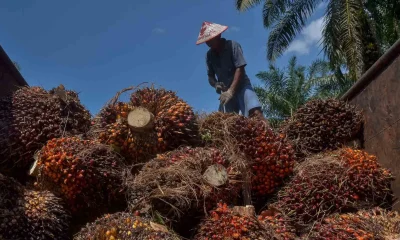
3. Smallholder Fragmentation:- Over 70% of Africa’s palm oil is produced by smallholder farmers, many lacking access to finance, technology, or sustainable certification. Without strong support systems, African producers may struggle to meet both local and global quality standards.
4. Policy Misalignment:- National governments often prioritize protecting local industries. Import bans, sudden policy shifts, or export restrictions could undermine AfCFTA’s unified vision. Nigeria, for instance, has periodically restricted palm oil imports to protect domestic producers—moves that may clash with AfCFTA liberalization goals.
5. Global Competition:- Malaysia and Indonesia benefit from economies of scale, advanced refining, and established trade networks. Africa must compete not only within its borders but against these global giants who can undercut prices.
Case Studies: What AfCFTA Could Mean in Practice
Nigeria:As Africa’s largest palm oil producer (~1.4 million tons annually), Nigeria has the scale to lead. Under AfCFTA, it could export surplus to West African neighbors. But Nigeria still imports ~500,000 tons yearly due to refining bottlenecks. AfCFTA could attract investment into refining capacity.
Ghana: Ghana produces ~300,000 tons annually, much of it consumed locally. With AfCFTA, Ghana could emerge as a refining hub for West Africa, leveraging its relatively stable policy environment and port infrastructure.
Côte d’Ivoire & Cameroon: Both countries export crude palm oil regionally. Harmonized AfCFTA rules could expand their markets beyond Francophone West Africa into East Africa.
Kenya & East Africa: East African countries are major importers of palm oil, largely from Asia. If West and Central African supply chains strengthen under AfCFTA, East Africa could shift sourcing to intra-African suppliers.
The Geopolitical Angle
Palm oil is more than economics—it’s geopolitics.
- Asia vs. Africa: Malaysia and Indonesia will fight to maintain dominance in Africa. They may cut prices, invest in local refineries, or sign bilateral deals to stay competitive.
- EU Regulations: As EU imports fall due to sustainability rules, African producers who align with sustainability standards could capture premium markets, especially under AfCFTA.
- India & China Demand: AfCFTA could allow African countries to consolidate output and negotiate better trade terms with India and China, rather than competing individually.
What Needs to Happen for AfCFTA to Work
For AfCFTA to truly transform palm oil trade competitiveness, five priorities stand out:
- Invest in Infrastructure – roads, ports, storage, and refineries to reduce intra-Africa logistics costs.
- Support Smallholders – financing, training, improved seedlings, and certification programs to boost yields and meet global standards.
- Policy Alignment – governments must harmonize tariffs, avoid protectionist policies, and commit to AfCFTA rules.
- Regional Value Chains – specialization across countries (production vs refining vs distribution) to maximize competitiveness.
- Sustainability Integration – invest early in traceability and certification to capture premium EU and niche global markets.
Outlook: Will AfCFTA Deliver?
The truth is, AfCFTA alone will not magically make Africa competitive in palm oil. But it provides a framework: a giant market, harmonized rules, and reduced barriers.
The question is execution. If African leaders, private investors, and smallholders align to seize the opportunity, AfCFTA could transform palm oil from a fragmented, import-dependent sector into a continental powerhouse.
If not, the status quo remains: Asia dominates supply, Africa consumes passively, and the continent misses out on billions in value.
Final Word
The AfCFTA effect on palm oil is not predetermined. It is a test of Africa’s ability to move from potential to performance. With unity, investment, and smart policy, Africa can not only meet its own demand but also compete globally.
As one trade analyst put it:
“AfCFTA gives Africa the map. But the continent must still drive the car.”