Case Studies
Meet the Nigerian Tycoons Cashing In on a $600 Million Import Bill
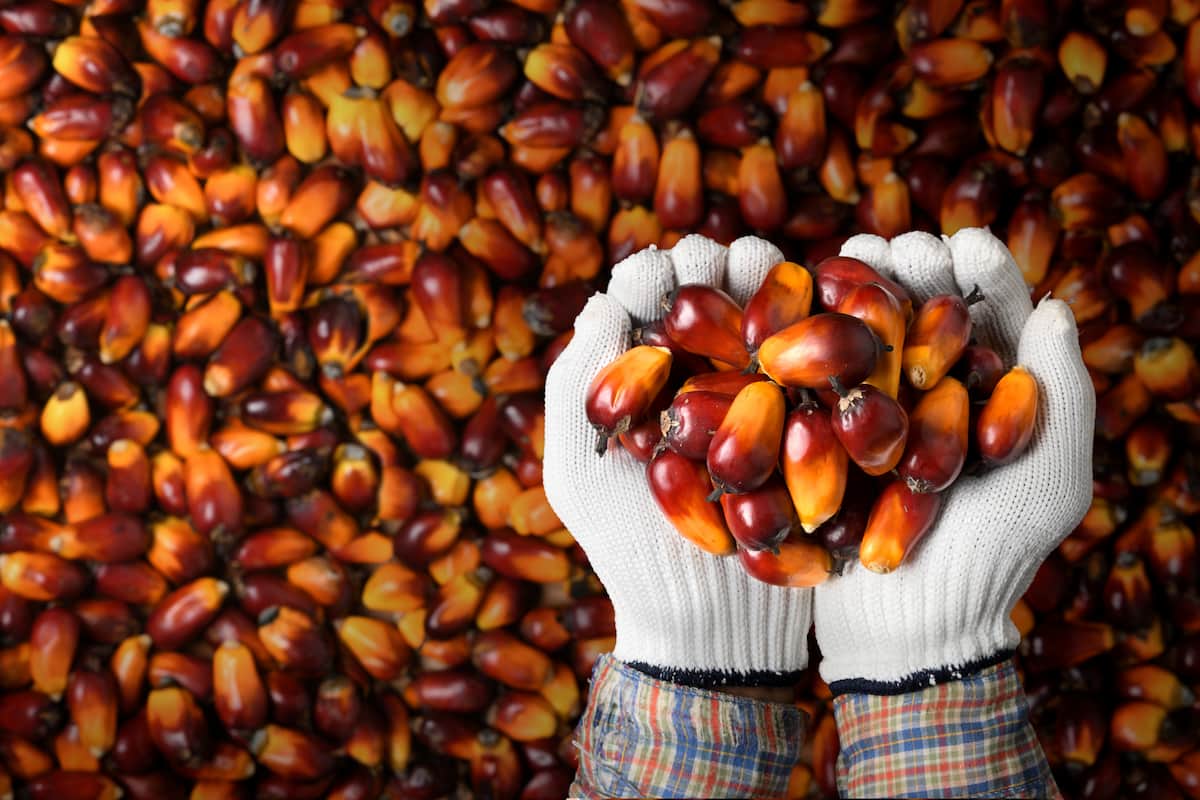
Nigeria has a $600 million problem. Every year, the country that once supplied nearly half the world’s palm oil now has to buy roughly that much from abroad just to keep its kitchens stocked and its factories running. For most of the economy, that’s a drain — foreign exchange leaving the country for a crop Nigeria practically invented as a global commodity a century ago. But for a small handful of listed agribusiness companies, that same shortage has become one of the most reliable profit machines on the Nigerian Exchange.
In 2025, two companies in particular turned Nigeria’s supply crisis into a record-breaking year. Presco Plc closed the year with pre-tax profit of ₦178.6 billion, up 57.3% from the year before. Okomu Oil Palm Company wasn’t far behind, posting ₦87.3 billion in pre-tax profit, a jump of 63.6%. Between them, the two companies have quietly become some of the most profitable non-oil businesses in the country — at a moment when ordinary Nigerians are watching palm oil prices swing wildly at the market stall.
The Math Behind the Boom
The arithmetic is simple, even if the politics around it aren’t. Nigeria produces around 1.57 million tonnes of palm oil a year but consumes closer to 2.6 million tonnes. That structural gap — over a million tonnes annually — has to be filled somehow, and for decades it’s been filled by imports, informal cross-border trade, and smuggling. When global palm oil prices climbed through 2025 and into 2026, driven by tight supply out of Southeast Asia and Indonesia’s aggressive biodiesel mandates, that price signal flowed straight through to Nigeria’s largest domestic producers. They didn’t need to sell more — they just needed to sell at higher prices, and the deficit meant every tonne they grew found a buyer instantly.
For companies sitting on thousands of hectares of already-planted, already-maturing palm — the kind of asset that takes seven to ten years to bring into full production — that’s about as close to a guaranteed windfall as agriculture gets.
The Names Behind the Numbers
Presco Plc traces its ownership to SIAT NV, a Belgian agro-industrial group with plantation interests stretching across West and Central Africa. In December 2025, SIAT injected a fresh $100 million into Presco — the first installment of a planned $1 billion commitment over the next decade. That capital is now fueling an aggressive expansion: a new $100 million integrated project in Ogun State, and the acquisition of 10,000 hectares across the Nsadop and Boki plantations in Cross River State. Presco isn’t just harvesting the current price boom — it’s betting that Nigeria’s supply gap will persist long enough to justify a decade of continuous build-out.
Okomu Oil Palm, meanwhile, is controlled by Socfin, a Luxembourg-based plantation group with a portfolio spanning Africa and Southeast Asia. Unlike Presco, Okomu has less untapped land available for fresh planting, so its strategy has leaned toward squeezing more out of what it already has — improving extraction rates, replanting older groves with higher-yielding trees, and tightening operational efficiency. It’s a quieter growth story, but one that delivered nearly as spectacular a bottom line in 2025.
Both companies are headquartered in Edo State, a region that has become the epicenter of Nigeria’s formal palm oil sector and the launchpad for a new state government program allocating 120,000 hectares to a dozen investors, with an eye on hitting 300,000 metric tonnes of output by 2030.
A Boom With an Expiry Date?
Here’s the twist: the tycoons’ golden run may already be cooling. By the first half of 2026, Presco’s profit after tax had actually fallen 7.3% year-on-year to ₦82.2 billion, and Okomu’s dropped 16.4% to ₦39.7 billion. The culprit, according to industry watchers, is the very same import dependency that made these companies rich in the first place — a fresh wave of cheap imported vegetable oil flooding through Nigeria’s porous borders has started to erode the pricing power that fueled 2025’s record year. It’s a reminder that in a market this exposed to global price swings and weak border enforcement, no boom is guaranteed to last.
The View From the Village
It’s worth pausing on who isn’t sharing in this windfall. While Presco and Okomu post record profits, palm oil at some rural markets has been selling for under ₦2,000 — a price farmers and industry groups call unsustainable, barely covering the cost of production for smallholders who rely on the crop for school fees and household expenses. The same import surge that’s now denting the listed giants’ margins has, for over a year, been quietly devastating the smallholder economy that still supplies a meaningful share of Nigeria’s informal palm oil trade.
That contrast — record corporate profits sitting alongside farmgate prices too low to live on — is really the story of Nigeria’s palm oil sector in 2025 and 2026. It’s an industry with real capital, real ambition, and a credible federal strategy aiming for self-sufficiency by 2050. But it’s also an industry where the benefits of scarcity have flowed disproportionately to a handful of well-capitalized, foreign-backed companies, while the smallholders who still grow much of the country’s palm oil are exposed to exactly the kind of price volatility and import competition that the big players are equipped to survive.
Whether Nigeria’s new national strategy — and a promised $1.5 billion push to plant 1.5 million new hectares by 2029 — can close that gap, or whether it simply produces a few more tycoons, is the question the next few years of this story will answer.